Why Is My Dishwasher Not Draining? 7 Fixes Before You Call a Repair Service
In this article
- 01Start With These 30-Second Checks
- 021. Clean the Drain Filter
- 032. Check the Garbage Disposal Knockout Plug
- 043. Inspect the Drain Hose for Kinks or Clogs
- 054. Clear the Air Gap
- 065. Test the Drain Pump
- 076. The Check Valve Is Stuck
- 087. Control Board Failure (Last Resort)
- 09Tools You Will Probably Need
- 10When You Should Actually Call a Pro
- 11Quick Summary
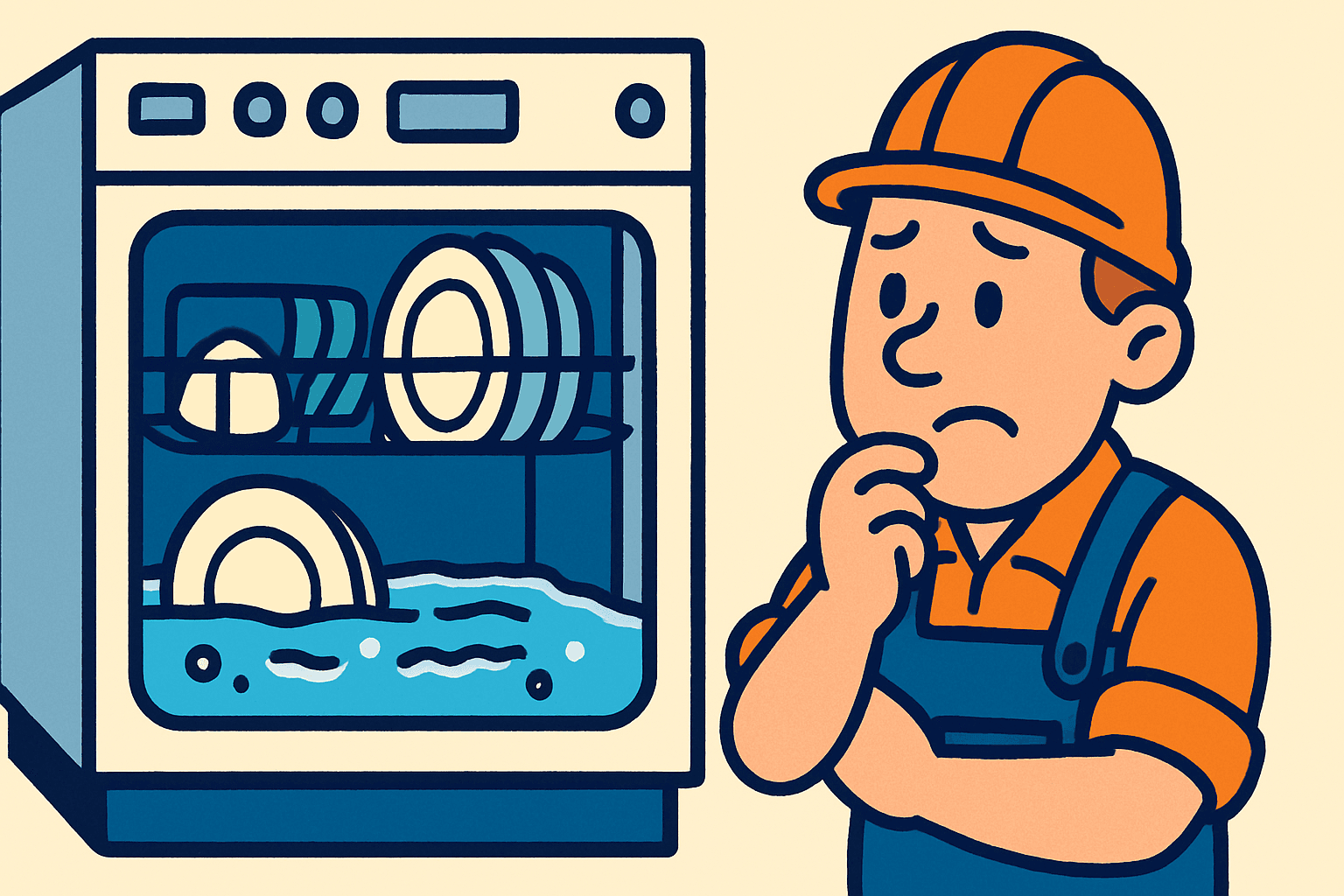
You open the dishwasher after a cycle and there is a puddle of dirty water sitting at the bottom. Annoying, but rarely catastrophic. In nine out of ten cases this is one of seven simple problems, and most of them you can fix in under 30 minutes with a flashlight and a towel.
Before you do anything else, run the cycle one more time and listen. If you hear the pump trying to work but no water is leaving, the issue is downstream of the pump (filter, hose, air gap, or garbage disposal). If you hear nothing at all, the pump itself or the control board is the suspect. That single observation cuts the diagnostic time in half.
Start With These 30-Second Checks
- 1Cancel the current cycle and run a Drain-only cycle (most models have this on the front panel). Sometimes the dishwasher just did not finish.
- 2Open the door and remove the standing water with a towel and a measuring cup. You need a dry tub to inspect anything.
- 3Check whether the kitchen sink next to the dishwasher drains normally. If the sink is also slow, the problem is your house plumbing, not the dishwasher.
- 4Look at the back of the sink for an air gap (the small chrome cylinder). Pop the cap and clean any food debris out of it.
1. Clean the Drain Filter
This is the number one cause and the easiest to fix. Most modern dishwashers have a removable filter at the bottom of the tub. Twist it counterclockwise, pull it out, and you will likely find a sludge of food particles, grease, and broken glass. Rinse it under hot water with a brush, twist it back in, and run a hot cycle.
Pro tip
Clean the filter once a month. It takes 60 seconds and prevents 80 percent of drain problems before they start.
2. Check the Garbage Disposal Knockout Plug
If your dishwasher is brand new or the disposal was just replaced, there is a chance the knockout plug inside the disposal inlet was never removed. The dishwasher hose connects to the disposal but the water has nowhere to go. Disconnect the hose, look inside the disposal inlet with a flashlight. If you see a solid plastic disc, knock it out with a screwdriver and a hammer, fish out the piece, then reconnect.
3. Inspect the Drain Hose for Kinks or Clogs
The drain hose runs from the back of the dishwasher to either the garbage disposal or directly to the sink drain. Pull the dishwasher out from under the counter (carefully, the water line and power are still connected) and look at the hose. A kink, a sagging loop full of water, or a section pinched against the wall is a common cause. If the hose is over five years old and feels stiff, replace it - they crack from the inside out.
Stuck on a step?
Snap a photo of your dishwasher's drain area and Fixable's AI tells you exactly which part you are looking at and what to do next. Free for 3 days.
4. Clear the Air Gap
Required by code in many regions, the air gap is the small chrome cylinder on the back of your sink. It prevents dirty sink water from siphoning back into the dishwasher. It also clogs with food sludge over time. Twist off the cap, pull out the inner cover, and rinse everything under hot water. If water sprays out of the air gap during a cycle, that is a clear sign it is blocked.
5. Test the Drain Pump
If the filter, hose, and air gap are all clear, the drain pump itself may be jammed by a piece of broken glass, a fruit pit, or a chicken bone. With the dishwasher unplugged, remove the bottom spray arm and the filter housing. The pump impeller is just below. Use a wooden chopstick to feel around for foreign objects and remove anything you find. If the impeller spins freely but the pump still does not run during a cycle, the motor itself is dead and needs replacing (a 30 dollar part on most models).
6. The Check Valve Is Stuck
A check valve in the drain line stops water from flowing back into the tub. If it gets stuck open, water keeps siphoning back in even after a successful drain cycle. You will see this as a dishwasher that drains, but is full again the next morning. The valve is usually a small flap inside the pump housing - clean it or replace it for a couple of dollars.
7. Control Board Failure (Last Resort)
If you have checked everything mechanical and the pump is silent during what should be the drain phase, the control board is sending the wrong signal. This is rare and the only time it makes sense to consider professional help, since a new board often costs as much as a budget dishwasher.
Tools You Will Probably Need
🛠️ Tools You Will Need
- •Flashlight or phone light - Looking inside the drain pump area
- •Phillips screwdriver - Removing filter housing and hose clamps
- •Old towels - Soaking up the standing water and any spills
- •Wet-dry vacuum (optional) - Faster than scooping water out by hand
- •Replacement drain hose - Only if the existing one is cracked or kinked
When You Should Actually Call a Pro
If you hear a continuous humming with no movement, smell burning electrical insulation, or see water leaking from the bottom of the dishwasher onto the floor, stop and unplug it. Those are signs of a seized pump or a cracked tub - both are jobs where DIY can damage the cabinets or void warranties.
Safety reminder
Always unplug the dishwasher (or flip the breaker) before reaching into the pump area. Even a small motor can cause a nasty injury if it cycles unexpectedly.
Quick Summary
- ›Standing water → 70 percent of the time, it is a clogged filter. Check that first.
- ›If the dishwasher is new or the disposal was replaced, look for a knockout plug.
- ›Old, stiff drain hoses crack and kink. Replace if over 5 years old.
- ›Clean the air gap on the back of the sink every 6 months.
- ›Total time for most fixes: 15 to 30 minutes. Total cost: 0 to 15 dollars.
STUCK ON YOUR REPAIR?
Paste any video link or just describe the problem. Fixable turns it into a clean step-by-step guide with images, tools, and parts.
3-day free trial · 7 languages · Cancel anytime
Keep Reading
How to Fix a Leaking Faucet in 15 Minutes (No Plumber Needed)
A dripping faucet is one of the easiest plumbing repairs in the house. Once you know which of the four faucet types you have, the fix is the same every time and takes about 15 minutes.
Washing Machine Making Loud Noise? 6 Causes (And Which Are Serious)
A washing machine should hum, not roar. The noise it makes is the single best clue to what is wrong - here is how to translate the sound into a diagnosis.