AC Dripping Water Inside the House? 5 Causes (Stop the Leak Today)
In this article
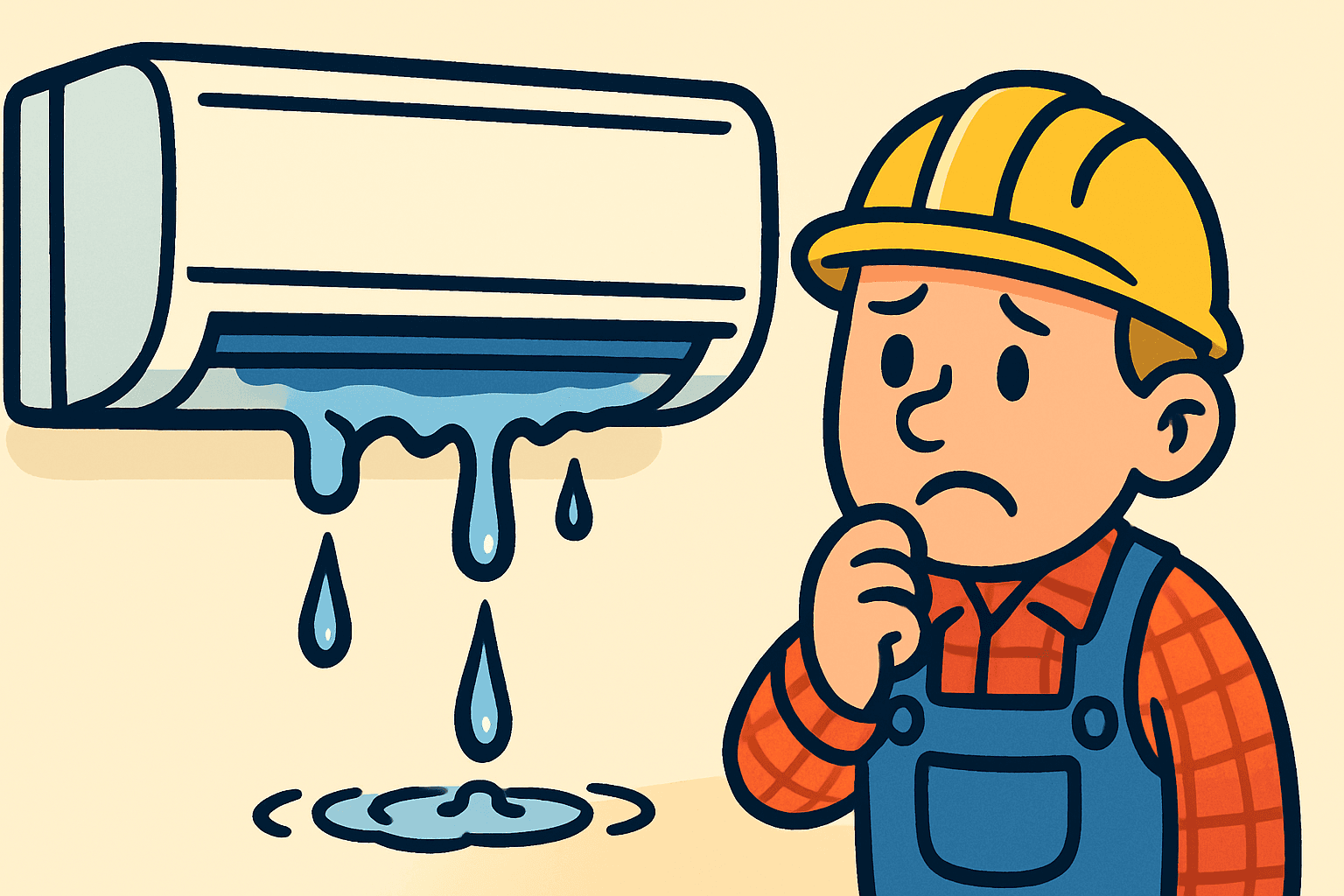
Air conditioners produce water. That is normal. They pull humidity out of your air, and that condensed moisture is supposed to drain harmlessly outside. When you see water dripping inside the house, something has broken in that drainage path. Left alone, it ruins ceilings, drywall, and floors fast.
Turn the AC off right now if water is actively dripping. Then work through these causes in order. The first one is the answer in 70% of cases.
Start With These 30-Second Checks
- 1Locate the indoor air handler (basement, attic, or closet). Look for a PVC pipe coming out and going outside or to a floor drain. That is the condensate line.
- 2Check the drain pan beneath the air handler. Full of standing water = drain is blocked. Empty = leak is elsewhere.
- 3Pull out the air filter. Caked with dust = airflow blocked = coil could be freezing.
- 4Look at the evaporator coil if you can see it. Frost or ice on the coil = definitely a freeze problem, not just drainage.
1. Clogged Condensate Drain Line (70% of Cases)
The drain line is a PVC pipe carrying condensation away from the air handler. Over time, algae and slime build up inside and block it. Water backs up into the drain pan and eventually overflows. This is the single most common AC leak.
- 1Turn the AC off at the thermostat.
- 2Find the cleanout port on the drain line (usually a vertical T-fitting near the air handler with a removable cap).
- 3Use a wet-dry vacuum to suck out the clog from the OUTSIDE end of the drain line (the end that exits the house).
- 4Hold the vacuum hose tight against the pipe with a rag to seal it. Run for 60 seconds.
- 5Pour a cup of distilled white vinegar down the cleanout port to kill remaining algae.
- 6Repeat every 6 months as preventive maintenance.
Preventive habit
Set a calendar reminder to pour vinegar down the drain line every spring before the AC season starts. Takes 30 seconds, prevents 90% of leaks.
2. Dirty Air Filter Causing Frozen Coil
If airflow across the evaporator coil is restricted, the coil gets so cold that it freezes solid. When it eventually thaws (when you turn the AC off), all that ice melts at once and overwhelms the drain pan. Water everywhere.
- 1Replace the air filter immediately. If your filter is more than 60 days old in cooling season, it is the prime suspect.
- 2Turn the AC OFF completely (not just thermostat, switch off at breaker) and let any ice melt for 4-6 hours.
- 3Place towels around the air handler to catch melt water.
- 4Once thawed, replace the filter, turn AC back on, and monitor for 30 minutes. If the coil refreezes, the problem is more than just the filter.
Do not run a frozen unit
Running the AC compressor while the coil is frozen can damage the compressor (a $1500-2000 part). Always let it thaw fully before restarting.
3. Low Refrigerant (Pro Required)
If the air filter is fine but the coil still freezes, you probably have a refrigerant leak. Low refrigerant lowers the coil temperature too much and the same freeze-and-flood pattern happens. This one is NOT DIY. Refrigerant is regulated and requires a certified HVAC tech.
- 1Symptoms: warm air from vents despite the AC running, ice on the refrigerant lines outside, high electric bills, freezing coil after a fresh filter.
- 2Turn the AC off until the technician arrives. Running it longer damages the compressor.
- 3Get at least two quotes. Recharge costs $200-600. If the leak is in the coil itself, you may be looking at a full coil replacement ($1500-2500).
- 4Ask the tech to inject UV dye while recharging. That makes the next leak findable in 10 minutes instead of an hour.
4. Broken Condensate Pump
If your air handler is in a basement or location below the drain line exit, a small pump moves water uphill to the drain. When that pump fails, water just sits in its reservoir and overflows.
- 1Find the pump. Small white box near the air handler with a clear reservoir and a PVC outlet.
- 2Check if it has power (some plug into a regular outlet, some are hardwired).
- 3Lift the float inside the reservoir with a chopstick. If the pump does not kick on, it is dead.
- 4Replace with a Little Giant VCMA-20 or similar (about $80, easy 15-minute swap). Disconnect the inlet hose, the outlet hose, and the power, swap pumps, reconnect.
5. Cracked or Rusted Drain Pan
Older systems have metal drain pans that rust through from the constant condensation. Newer ones have plastic pans that crack from age. Either way, water leaks out of the pan itself, not from anything you can unclog.
- 1Pull the access panel off the air handler. Find the primary drain pan directly under the coil.
- 2Run a paper towel along the bottom and sides. Find rust spots, cracks, or holes.
- 3For small cracks, a high-temperature epoxy or aluminum tape can buy you a season.
- 4For widespread rust or large cracks, the pan needs replacement. This requires partial system disassembly. Most homeowners call an HVAC tech here unless very comfortable with sheet metal work.
🛠️ Tools You Will Need
- •Wet-dry shop vac ($60) - the #1 tool for unclogging the condensate line
- •Distilled white vinegar - kills algae buildup, prevents future clogs
- •Fresh air filter (matching size) - the single cheapest preventive fix
- •Little Giant VCMA-20 condensate pump ($80) - direct replacement for failed pumps in basement installations
Water still dripping after the unclog?
Snap a photo of your air handler and drain line into Fixable. The AI identifies which of the 5 causes you actually have and walks you through the exact fix step by step.
STUCK ON YOUR REPAIR?
Paste any video link or just describe the problem. Fixable turns it into a clean step-by-step guide with images, tools, and parts.
3-day free trial · 7 languages · Cancel anytime
Keep Reading
Why Is My Dishwasher Not Draining? 7 Fixes Before You Call a Repair Service
Standing water at the bottom of your dishwasher is almost always one of seven things. Most of them you can fix yourself in 15 to 30 minutes without calling anyone.
How to Fix a Leaking Faucet in 15 Minutes (No Plumber Needed)
A dripping faucet is one of the easiest plumbing repairs in the house. Once you know which of the four faucet types you have, the fix is the same every time and takes about 15 minutes.